PXDesign Arrives at Ariax Bio: Diffusion-Powered Miniprotein Design
We're pleased to announce PXDesign as the newest protein design engine on the Ariax platform, joining BindCraft and BoltzGen in our growing toolkit for de novo binder design. PXDesign brings a fundamentally different approach to the problem, pairing a diffusion-based backbone generator with structure prediction confidence models for filtering and ranking, and it arrives with experimental validation that places it firmly among the best tools available.
If you're new to Ariax, learn about our mission, origin story, and transparent subscription-free business model in Introducing Ariax Bio.
From the Team Behind Protenix
PXDesign comes from ByteDance's AI for Science team, who previously released Protenix, one of the best performing and fully open-source reproductions of AlphaFold3. Protenix demonstrated that state-of-the-art structure prediction could be made openly available without compromises, and PXDesign continues that philosophy.
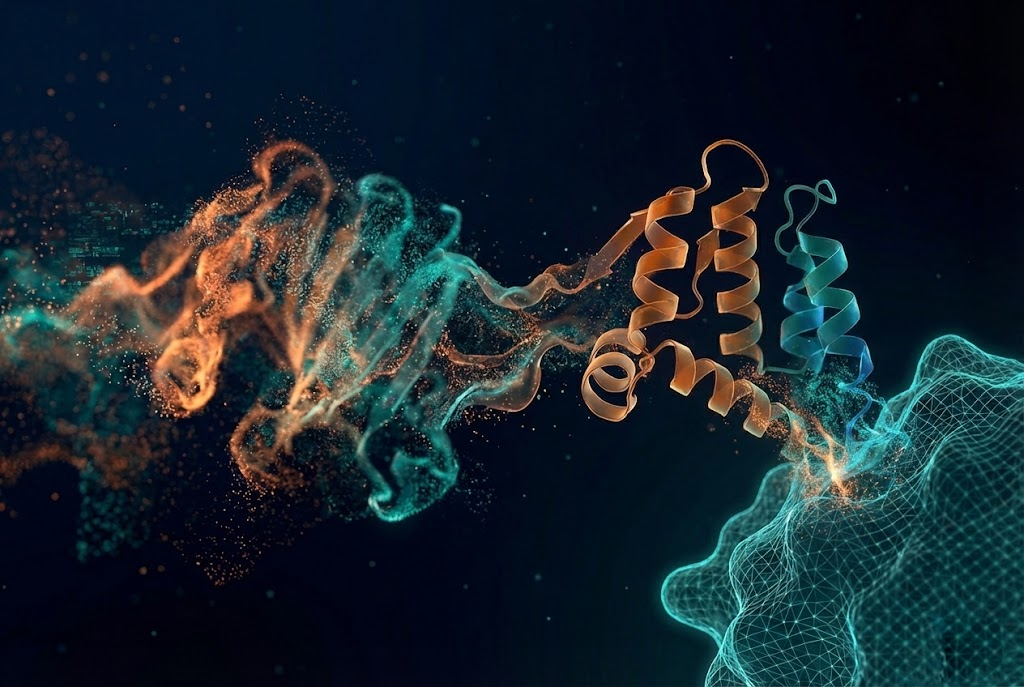
At its core, PXDesign pairs a diffusion-based backbone generator (PXDesign-d) with a dual-filter ranking system using both Protenix and AF2-IG confidence models. Built on a Diffusion Transformer (DiT) architecture that generates Cartesian atom coordinates directly, PXDesign avoids the expensive SE(3)-equivariant operations used by older diffusion models like RFdiffusion, achieving significantly faster generation speeds, particularly for longer sequences. The technical report also demonstrates that PXDesign's Protenix-based filtering captures a complementary set of true binders compared to AF2-IG, and that using both filters together provides broader coverage of the design space than either alone.
Like Protenix, PXDesign is released as fully open-source software under the Apache 2.0 license, free for both academic research and commercial use.
Experimentally Validated: Competing with the Best
The most compelling evidence for any design tool comes from wet-lab validation, and PXDesign's results across seven diverse protein targets are impressive. As reported in their preprint, PXDesign achieved nanomolar binder hit rates of 17-82% on six of seven targets:
- PD-L1: 82% hit rate (14/17 designs), with most binders exhibiting KD values below 100 nM. BindCraft achieves a comparable hit rate (~78%) on this target, while BoltzGen managed just 10% on PD-L1, and RFdiffusion 13%.
- SARS-CoV-2 RBD: 50% hit rate, dramatically outperforming both RFdiffusion (5%) and BoltzGen (0%) on this challenging target. Among proprietary tools, only Chai-2 (23%) has reported results here.
- IL-7RA: 40% hit rate, outperforming both BindCraft (10%) and RFdiffusion (34%). The proprietary Chai-2 leads on this target at 70%.
- VEGF-A: 39% hit rate, well above RFdiffusion's 7%.
- TrkA and EGFR: 17% hit rates on each.
- TNF-alpha: 0%, a notoriously difficult target where no open-source method has yet succeeded.
The picture that emerges is clear: among open-source tools, PXDesign substantially outperforms RFdiffusion and BoltzGen on every target where comparisons exist, and generally matches BindCraft. PXDesign's designs are also structurally diverse, spanning a broad range of secondary structure compositions.
Adaptyv Nipah Challenge: Independent Validation
Beyond the team's own experiments, PXDesign was tested in the Adaptyv Bio Nipah virus G protein binder design challenge, the largest community protein design competition to date. Over 650 participants submitted more than 10,000 designs targeting the Nipah virus glycoprotein G, a particularly challenging target with limited prior binder work. Of the 1,200 designs selected for experimental testing, roughly 10% showed binding overall, with 26 achieving single-digit nanomolar affinity.
From a relatively small set of roughly 20 PXDesign submissions that were selected for testing, the hit rate came in at approximately 20%, roughly double the competition-wide average and far exceeding the success rates in the de novo design track. This placed PXDesign at the top end of diffusion-based models in the competition, rivaling the yet-unreleased BindCraft2 and exceeding the success rates reported for BoltzGen. For a diffusion model going up against a difficult, novel target in a community-run blind evaluation, this is a strong result.
For the miniprotein design community, having a diffusion-based engine alongside hallucination-based BindCraft that delivers competitive experimental performance provides valuable optionality. Different architectural approaches can succeed or fail on different targets, and having access to both methods dramatically increases the likelihood of finding binders for challenging targets.
Secure, Private Compute on Your Terms
PXDesign's open-source nature is one of its greatest strengths, but running it locally requires navigating complex dependencies including custom CUDA kernels, Protenix model weights, and substantial GPU resources. Ariax eliminates this burden entirely.
When you run PXDesign on Ariax, your job executes on a private, transient cloud GPU instance provisioned exclusively for your run. Each instance is located in a US, EU, or Canadian data center, handles only a single job, and is terminated once your run completes. Your target structures, design parameters, and results never leave this controlled environment and are never shared across users or jobs. For organizations with strict data governance requirements, this architecture provides the confidence that sensitive structural data remains within established regulatory jurisdictions at all times.
As with all engines on Ariax, there are no subscriptions, no platform fees, and no IP entanglements. You pay only for the GPU compute your job consumes, and the resulting sequences are entirely yours.
PXDesign on Ariax: Simple Setup, Powerful Pipeline
We've built a streamlined interface for PXDesign that handles the complexity of its multi-stage pipeline behind the scenes. Upload your target structure (PDB or mmCIF), configure your chains, specify hotspot residues and binder length ranges, and launch. Ariax handles environment setup, model weight downloads, MSA preparation, and the full Extended pipeline: diffusion generation, AF2 evaluation, Protenix evaluation, and final ranking.
Under the hood, we maintain a cloud-optimized fork with full resume capability, incremental output streaming, and distributed evaluation across GPUs — so if a multi-hour job is interrupted, it picks up where it left off rather than starting over.
Results stream to your project in real time. The summary table presents your ranked designs with confidence scores from both AF2 and Protenix, along with direct access to predicted structures for visualization. Download individual structures or bulk archive your diffusion outputs, AF2 predictions, and Protenix predictions for offline analysis.
BindCraft, BoltzGen, and PXDesign: A Complementary Toolkit
Each engine on Ariax represents a distinct design philosophy:
- BindCraft remains our primary recommendation for miniproteins and helical peptides, with the most extensive experimental validation and consistently high success rates across a wide range of targets.
- BoltzGen extends beyond miniproteins to VHH antibodies, cyclic peptides, helicons, and all-atom design against diverse molecular targets.
- PXDesign offers a diffusion-based alternative for miniprotein binder design with top-tier experimental performance, greater structural diversity than RFdiffusion, and a dual-filter pipeline that captures binders other methods miss.
We increasingly recommend running multiple engines against the same target. The preprint's own analysis shows that Protenix and AF2-IG filters retain largely non-overlapping sets of true binders, meaning no single filtering approach captures everything. The same principle applies at the engine level: the marginal cost of a second or third design campaign is modest relative to the downstream cost of wet-lab validation, and orthogonal computational approaches frequently identify binders that any single method would miss.
Available Now
PXDesign is live on Ariax with full Turbo Mode support for parallelized campaigns. Upload your target, configure your design parameters, and let PXDesign's diffusion pipeline generate and rank your candidates.
PXDesign is available immediately on all Ariax accounts. For setup instructions, see our PXDesign documentation. For technical details and local installation, visit the PXDesign GitHub repository. For the full preprint, see PXDesign: Fast, Modular, and Accurate De Novo Design of Protein Binders.